Business Waste Removal in Soho for Offices, Shops and Managed Premises

Business waste removal in Soho needs to be practical, discreet and organised around a busy commercial district where space is tight and access often matters as much as the clearance itself. We provide a service built around the removal of workplace rubbish, unwanted commercial items and routine non-hazardous waste, with collections planned to suit trading hours, building access and day-to-day operations. The aim is straightforward: to help premises stay clear, workable and presentable without unnecessary disruption.
Our work covers a broad range of office and retail waste streams, from bagged general rubbish to bulkier items that need careful handling. We can also support clearances linked to refurbishments, stock changes, storage rationalisation and the removal of outdated fixtures. If you are comparing options, the most useful starting point is usually the type of material, how quickly it needs to go, and whether the job is a one-off clear-out or part of ongoing commercial waste management.
Request a quotation when you are ready to outline the load, the access and the timing. If you already know the main items, that is enough to begin; if not, a brief description of the premises and waste type will usually help us suggest a suitable approach.
Commercial waste collections arranged around your premises
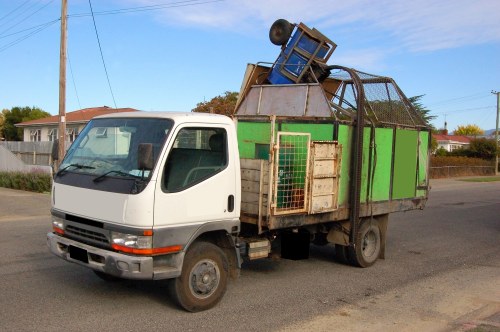
Our business waste collections are designed for premises that need items removed without turning the working day upside down. In Soho that often means handling mixed waste from offices, hospitality back-of-house areas, shops, studios and managed buildings where storage space is limited. Collections can be tailored to the volume involved, whether it is a small pile of bagged rubbish after a tidy-up or a larger accumulation from a move, clear-out or operational change.
Where practical, we separate out suitable recyclable material so that general waste is not the default for everything. Cardboard, paper, office furniture, metal items and some hard plastics may be managed differently depending on the load and condition. That approach helps keep the process orderly and gives you a clearer picture of what is being removed. Bulky items are handled with the same care as lighter waste, especially where narrow entrances, shared corridors or upper floors are involved.
The easiest way to plan a collection is to group the waste by type if you can, then note any access issues such as lifts, loading restrictions or shared entrances. Tell us what is present, how much there is and where it is stored; that usually gives enough detail to shape the job properly. For a quick first step, you can also compare the main waste categories against your own premises before asking for a quotation.
Office waste, furniture and equipment clearance

Many business waste removal jobs in Soho involve office contents rather than loose rubbish alone. Desks, chairs, filing cabinets, shelving, meeting tables and similar items often need careful movement through working buildings, especially where corridors are shared or the layout is compact. We remove these items as part of a planned clearance, helping offices reduce clutter and recover usable space for day-to-day work, relocations or refurbishment preparation.
Office equipment can also form part of the load, provided it is suitable for collection and has been described accurately in advance. That may include stands, shelving units, small appliances, printers and other redundant items that are no longer required on site. Where documents are involved, confidential shredding is a useful separate service page to review when paperwork needs controlled destruction rather than general disposal. The key point is to match the method to the material, not to treat everything as generic rubbish.
Clearance work is usually easier to organise when the items are listed in broad groups rather than as a single mixed pile. For example, one group might be furniture, another might be electrical equipment, and another might be general refuse or packaging. If you are preparing a quotation request, note anything awkward to carry and mention whether the items are on a ground floor, basement or upper level. That gives a much better starting point for planning.
Retail, hospitality and mixed-use waste streams
Soho premises are often mixed-use, and that changes the shape of a waste job. Retailers, cafés, bars, small offices and studio spaces may all generate different materials, from packaging and broken fittings to display items, storage containers and occasional refurbishment waste. Business waste removal in this setting needs to stay flexible, because the waste produced by one unit can be quite different from the waste produced by the unit next door.
We can support the removal of non-hazardous waste from premises that need a tidy internal reset, a post-delivery clear-out or help dealing with accumulated stock room items. The most efficient jobs are those where suitable items are already separated from waste that requires specialist handling. If you are dealing with redundant fixtures, there is often value in deciding early whether they are to be removed for disposal, recycling or resale elsewhere before the load is collected.
In practical terms, it helps to think about three questions: what is being removed, how much of it there is, and whether it is loose, boxed or assembled. That is often enough to set the right approach. Keep the description simple and factual, and do not worry if you do not know every item name. A brief list of the main materials is usually more useful than a long explanation.
Common waste types we can remove
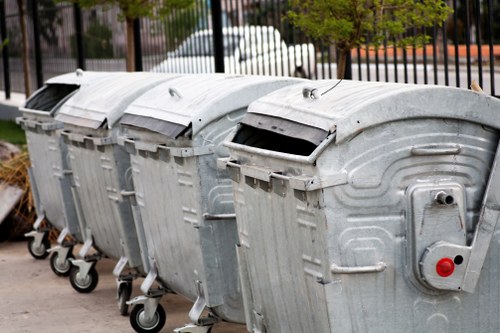
Different sites produce different waste, and a good collection plan depends on identifying the load accurately. For business customers, common examples include bagged rubbish, cardboard, packaging, unwanted office furniture, redundant shelving, broken fittings and mixed non-hazardous clear-out waste. Some sites also need help removing old appliances or large items from staff areas, storage rooms or back-of-house spaces. The more clearly the waste is described, the easier it is to match the collection to the job.
Useful items to mention in an enquiry include:
- the main waste categories present
- approximate quantity or number of items
- floor level and access details
- any items that are heavy, fragile or awkward
- whether the waste is already gathered in one place
We do not need a perfect inventory to begin. In many cases, a short note and a couple of practical details are enough to quote the work sensibly. If you are unsure whether an item belongs in a business waste load or a separate specialist service, it is better to mention it than to leave it out. That one detail can change the handling plan and avoid delays on the day.
About Soho
Soho is a central London district in the West End, lying within the City of Westminster and known for its compact street pattern, dense mix of buildings and long association with entertainment, media, hospitality and independent commerce. Its name has been in use since at least the seventeenth century, and the area developed from open land and market gardening into an urban quarter shaped by Georgian terraces, later commercial changes and the pressures of a city centre location. Today the neighbourhood is marked by a blend of older streets and heavily adapted premises, with narrow frontages, upper-floor rooms and limited open space giving it a distinctive character. The area’s built environment includes a wide range of architectural periods, from surviving historic houses and converted buildings to twentieth-century and modern commercial insertions. Soho Square remains one of its best-known open spaces, while nearby streets lead towards larger West End landmarks such as Leicester Square, Oxford Street and Piccadilly Circus. The district has long been associated with theatres, recording studios, media offices, restaurants and nightlife, and that layered history is visible in the way the streets are used at different times of day. Even where individual buildings have changed purpose repeatedly, the overall feel remains that of an intensely urban place shaped by movement, adaptation and reuse rather than by large single-purpose sites. Its cultural life is reinforced by nearby theatres, music venues, independent businesses and a constant flow of workers, visitors and residents, making it one of the most recognisable neighbourhoods in central London.
Clearances for moves, refits and end-of-lease changeovers
Business waste removal is often needed at moments of transition rather than as part of an everyday routine. A move to another floor, a tenancy handover, a refit or a stockroom reorganisation can all generate waste that needs to be removed in a structured way. The most efficient clearances focus on what must go, what can stay, and what needs to be separated before the removal begins. That keeps the work manageable and reduces the chance of useful items being mixed in with disposal materials.
For these jobs, timing matters. Some premises need waste removed before contractors arrive, while others need a final clear-out after internal teams have sorted equipment and furniture. In either case, our service can be shaped around the order of the site rather than forcing everything into one rigid collection pattern. If there are multiple rooms, storage areas or floors, it often helps to identify which spaces matter most so the work can be phased sensibly.
When you are comparing options, look at the scale of the clearance and the type of material rather than simply the label of the job. End-of-lease clearance, for example, may involve furniture, packaging, general waste and a few leftover fixtures, while a refit job may be dominated by stripped-out items and construction-related waste. A clear description of the load is more helpful than a long list of assumptions.
Pricing factors and practical planning

Quotation requests are usually easier to price when the main variables are known in advance. The quantity of waste, the type of material, the ease of access, the lifting involved and whether the job includes one room or several all influence how the work is approached. Heavy items, awkward stairs, restricted loading arrangements and tight collection windows can each affect planning. That is why a brief but accurate description is often more useful than an overly broad request.
You do not need to prepare a formal schedule. A simple summary is enough if it includes the main items, the location of the waste within the premises and any issues that might slow the work. Photographs can be helpful where they show the actual load and the access route, and an estimate of quantity gives a better basis than vague wording. If you are ready to move forward, ask for a quotation and we can take the next step from there.
For many business customers, the real value lies in getting the waste removed in a way that fits around operations. That may mean a single off-peak visit, a larger planned clearance, or a phased removal of items from several areas. Keep the request specific enough to be useful, but do not overcomplicate it; practical information is what helps most when planning the collection.
Recycling, segregation and responsible disposal
Commercial waste is rarely just one material, so good segregation can make the removal more orderly. Cardboard, office paper, metals, furniture and mixed general waste often need different handling routes, and a job is usually smoother when the obvious recyclables are kept apart from rubbish that cannot be reused. Where items are suitable for recycling, that may reduce the amount of mixed waste and make the collection easier to organise.
Responsible disposal also means being realistic about what should not be bundled into a standard business clearance. Some materials need specialist handling or a separate process, and the correct choice depends on the item rather than on convenience. If you are unsure about a particular object, mention it in the enquiry instead of making a guess. That is particularly important for anything that may involve electrical components, controlled materials or content that should not be mixed with general waste.
One practical way to prepare is to divide the load into categories before collection day. This can be as simple as making separate piles or marking boxes and bags by type. That small amount of sorting often makes the collection more efficient and can improve the flow through shared corridors, loading points and storage areas. It also helps the team understand what the site needs without unnecessary back-and-forth.
Choosing the right business waste service
The right service is usually the one that matches your premises, your schedule and the kind of waste you actually have. A compact office with a few unwanted desks needs a different approach from a hospitality venue clearing packaging, shelving and mixed refuse. Before you request a quotation, it helps to decide whether the priority is furniture removal, general rubbish clearance, a mixed commercial load or a more specific service such as shredding or appliance removal.
If the site has regular waste, it may also help to think about whether the current arrangement is working well or whether the problem is mainly a one-off accumulation. Business waste removal in Soho can be set up to solve a temporary clearance need, but it can also form part of an organised sequence of visits where the volume changes from week to week or month to month. The clearer the purpose, the easier it is to shape the work.
Request a quotation when you have the main details to hand, and keep the final instruction simple. The best starting points are what needs to go, where it is located, and when it needs to be removed. If the waste is mixed, heavy or spread across several rooms, say so plainly. That single step often saves time and leads to a more accurate plan for the collection.
Preparing for collection and what to expect on the day
A well-prepared collection usually begins with the waste being made accessible rather than perfectly organised. If items are already together, that helps, but it is not always essential. What matters most is that the team can reach the load safely and understand which items are included. For office and commercial premises, this may mean clearing a route through desks, moving small objects out of the way or identifying which room contains the waste.
Where practical, it helps to leave doors open, point out any difficult access features and make sure someone on site can confirm the items to be taken. If the load contains several different categories, a brief walk-through can prevent confusion. Good communication at the start often matters more than lengthy preparation, particularly in busy premises where operations cannot stop for long.
If you are arranging a collection for the first time, treat the enquiry as a working description rather than a formal report. A few lines about the premises, the waste and the access are usually enough to begin. Then ask for your quotation and decide whether the timing suits the way your business runs.